
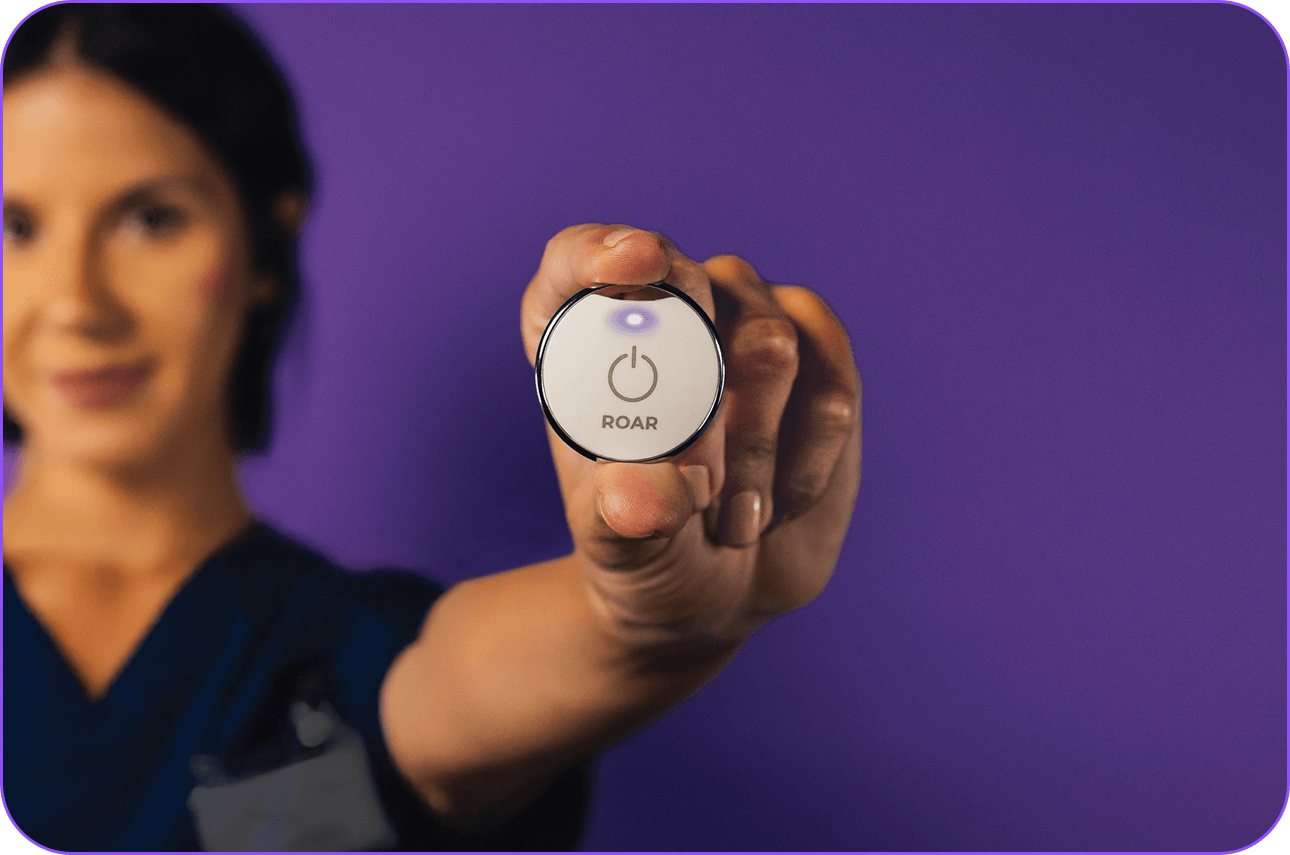
| Duress buttons and panic buttons are commonly used in healthcare, hospitality, retail, education, and more, providing increased protection for workers and improving workplace safety. An instant response to an emergency can make all the difference, with staff wellbeing and peace of mind also helping you see tangible returns on your businesses investment within 12 months of implementation. |
Duress buttons, sometimes known as panic buttons, are an important tool used during emergency situations within the workplace. They offer a lifeline to vulnerable workers, providing immediate response in the case of workplace violence or harassment, as well ensuring fast responses during medical emergencies and other situations where help is needed.
While panic buttons may be familiar to you, the term “duress button” is increasingly being used to differentiate systems meant for the protection of individuals from the more generic term. For instance, a panic button may be considered an important piece of failsafe technology in heavy machinery, whereas a duress button is a system designed to call for help should an individual be injured by that machinery.
Additionally, and particularly in high-risk environments where workplace violence and sexual harassment are prevalent, the term duress button is often preferred over names that include terms such as “panic” or “SOS”, aiming to ensure there is no stigma attached to triggering an alert and normalizing their use in any situation of duress.

What Are Duress Buttons and Panic Buttons?
Duress buttons/panic buttons are security devices designed to alert first responders and/or emergency services in the event of an emergency or dangerous situation. In my experience, wearable panic buttons are considered the most reliable and effective way to call for help, protecting the user against any potential escalation in cases where they are being threatened or attacked. However, under desk systems may also be installed in locations where potential risks or threats might occur, such as corporate offices, hospitals, retail stores, or high-security areas.
Duress/panic devices are usually activated by pressing the button. Once triggered, a silent alarm is sent to a monitoring center, security team, or first responders. While these features are common in most systems, it is important to consider how the network is connected, how effective it will be in your building, and how it is installed.

Common Use Cases for Duress and Panic Buttons
While panic buttons and duress button systems can essentially be used anywhere, there are some environments and industries that have a particular need for these solutions. For example, there are a growing number of duress button laws in healthcare, hospitality and education sectors mandating the use of duress button systems, alongside a focus on reducing workplace violence through comprehensive workplace violence prevention plans.
Below, we take a detailed look at some of the most common industries where duress buttons are used.
Healthcare Settings
Violence costs U.S. hospitals an estimated $18.27B annually, according to a report published in 2025 by the American Hospital Association.
Hospitals, clinics, behavioral health facilities and nursing homes benefit from duress systems, especially in instances of a medical emergency or when staff members are faced with aggressive or hostile patients or visitors. Emergency rooms and psychiatric units often require immediate response from security teams or first responders to ensure the safety of both staff and patients.
Recently, state workplace violence laws have shifted from advisory guidelines to enforceable mandates with real deadlines. Ohio’s requirements took effect April 2025, Illinois demanded panic buttons for hospitals by July 2025, and nine more deadlines land before 2027.
Building infrastructure to meet the strictest standard (Illinois SB1435) automatically satisfies less prescriptive requirements in Ohio, California, Washington, and beyond — one investment covers the patchwork. Getting ahead of the compliance wave also protects your facilities from compounding penalties while positioning your system as a safety leader that attracts and retains staff.
Hospitality
Having worked within the industry, I have seen the difference that duress buttons can make to workplace safety. Wearable, wireless devices with discrete alarms are better able to protect staff from confrontations with guests or other potentially hazardous situations.
Housekeeping and maintenance staff, who often work alone or in isolated areas, also rely on these safety devices for peace of mind, while managers and owners must remain compliant with a growing number of panic button laws.
Educational Institutions
Schools and universities deploy duress buttons in classrooms or administrative offices to respond swiftly to threats or emergencies like aggressive behavior, medical emergencies, or intruders, ensuring student and faculty safety. Alyssa’s Act and Law, which includes a mandate for silent panic alarms directly connected to law enforcement, has passed in 10 states and is pending in another 17 states as of February 2026.
Retail Stores
Retailers, particularly in high-risk environments like convenience stores and gas stations, use duress buttons as part of their security products to protect against robberies or hold-ups. Employees can press a silent alarm during a dangerous situation without alerting the attacker, allowing law enforcement to respond discreetly.
States like New York are requiring retail employers with 500 or more employees to provide employees with a silent “response” or duress button that must request immediate assistance from a security officer, manager, or supervisor in the event of an emergency. This law takes effect in January of 2027.
Government Buildings
High-security environments like government facilities use duress buttons as part of their access control and intrusion detection systems to safeguard sensitive areas and personnel. They are also often used for lone workers in large facilities.
Corporate Offices and Workplaces
Corporate environments are increasingly adopting duress alarm systems to address internal threats like workplace violence or external security breaches.
Executives, receptionists, and HR staff can discreetly summon help during an emergency situation such as an intruder or active shooter.

Benefits of Duress Button Systems
Duress button systems offer a broad range of benefits for both individuals and organizations. As part of a workplace violence prevention plan, they can make a huge impact on staff wellbeing, while for lone and vulnerable workers, they have the potential to save lives and minimize the chance of life-changing injury. Below, I have compiled some of the key benefits that you should consider when searching for a duress button solution.
- Immediate Response — Duress buttons provide a way to immediately alert first responders or security teams in the event of an emergency. I have seen first hand the difference this kind of response can make, particularly in evolving situations where threats or acts of violence and sexual harassment are likely.
- Discreet Activation — Many systems offer discreet or silent alarms, ensuring that help can be summoned without escalating the situation further. I would always recommend this type of duress button over alternatives such as “screamers” and other audible alarms.
- Enhanced Security — Integrating these buttons with broader security solutions like CCTV and access control systems ensures a comprehensive approach to safety. In addition to your existing security measures, I would also suggest a comprehensive workplace violence prevention plan is in place to help systematically improve response and analysis.
- Reduced Response Time — With instant notifications and direct communication to emergency personnel, duress buttons significantly cut down response times during a crisis.
- Peace of Mind — Having experienced life as an undocumented worker, I understand how a duress button can provide a sense of security and reassurance, particularly for workers in high-risk environments like healthcare, hospitality, and retail.
- Personal Safety — Whether in an office, school, or retail store, individuals feel safer knowing they have a quick way to call for help during emergencies.
- Versatility Across Industries — From corporate offices to hospitals, duress and panic buttons are versatile and adaptable, making them ideal for various use cases. Our clients range from hotels to healthcare centers and beyond.
- Cost-Effective Solution — Many of these systems offer a cost-effective way to ensure security without the need for constant monitoring or security personnel on-site. Additionally, I have seen our clients achieve tangible ROI through staff retention and increased wellbeing, a 20-50% decrease in workers’ compensation costs within the first year, and a 40% reduction in incidents of workplace violence. A system pays for itself in cost savings within one year.
How to Choose the Right Duress Button System

While there are many different types of panic or duress button solutions on the market today, I would advise anyone looking to integrate a system into their existing infrastructure to look for the following features:
- Dead Zone Protection — Works in areas with poor WiFi or cell service using a self-healing Bluetooth network and LTE backup.
- Standalone Technology — Operates independently of your facility’s IT network, ensuring security and reliability without risking PII data.
- Light on Infrastructure — Wireless, battery-powered beacons with easy, drill-free installation.
- Emergency Response — Under-desk or wearable 911 panic buttons for lone or overnight workers without needing wiring or WiFi.
- Long Battery Life — Reliable, long-lasting batteries reduce the need for frequent replacements.
- Scalable — Expand the system easily as your organization grows.
- Comprehensive Training and Guidance — Inclusive training materials provided in multiple languages to boost staff adoption.

Contact a member of the ROAR team today to discuss your duress button requirements and learn how we can help you find the ideal solution regardless of the challenges in your industry.